The gray cylinder on a utility pole and the small black brick on your laptop charger are doing the same fundamental job: changing the voltage of electricity. Power leaves a plant at extremely high voltage, gets stepped down several times on its way to you, and ends up at a level your devices can use safely. A transformer is the device that performs each of those changes, and it does so with no moving parts, just two coils of wire and a clever use of magnetism.
A quick word on voltage and current#
Two terms keep coming up, so it helps to picture them with water flowing through a pipe.
- Voltage is like the water pressure. It is the push that drives electricity along.
- Current is like the rate of flow, how much water actually moves past a point each second.
- Power is the useful product of the two, pressure times flow, the real energy being delivered.
A transformer trades pressure for flow, or flow for pressure, while trying to keep their product, the power, roughly the same. Raise the voltage and the current drops; lower the voltage and the current rises. Keep that seesaw in mind, because it is the heart of what a transformer does.
The link is magnetism, not a wire#
Here is the surprising part: the two sides of a transformer are not electrically connected. Electricity does not flow straight across from input to output. Instead, the link between them is a magnetic field. Two simple laws of physics make this possible.
- A changing current makes a changing magnetic field. Run electricity through a coil of wire and it becomes a magnet. Change that current and the magnetism changes with it.
- A changing magnetic field makes a voltage in a nearby coil. Wave a magnetic field past a coil and it pushes electricity into motion, generating a voltage. This is called induction.
Put those together. The input coil, called the primary, creates a constantly changing magnetic field. The output coil, called the secondary, sits in that field and has a voltage induced in it. Energy crosses the gap as magnetism, then becomes electricity again on the other side. No current has to leap across; the magnetic field is the messenger.
This is also why transformers only work with alternating current, the kind that constantly reverses direction. Steady, unchanging current produces a steady magnetic field, and a steady field induces nothing. The field has to keep changing, which is exactly what alternating current provides.
The iron core that channels the field#
If the two coils just sat near each other in open air, most of the magnetism would scatter and be wasted. To prevent that, both coils are wound around a shared core made of iron or similar magnetic material.
Iron guides a magnetic field the way a pipe guides water, concentrating it and steering nearly all of it from the primary coil through the secondary. The core is the reason a transformer is so efficient: it makes sure the changing magnetism produced by one coil almost entirely reaches the other. The two coils never touch electrically, yet through the iron core they are tightly linked by magnetism.
Turns count: the gear ratio of electricity#
So what decides whether the voltage goes up or down? The answer is beautifully simple: the number of turns of wire in each coil.
Each loop of the secondary coil gets the same magnetic push, so the voltages add up loop by loop. The relationship is a direct ratio:
- If the secondary has more turns than the primary, the voltage goes up. This is a step-up transformer.
- If the secondary has fewer turns, the voltage goes down. This is a step-down transformer.
Double the turns and you roughly double the voltage; halve them and you roughly halve it. The voltage on each side is in proportion to its number of turns.
But remember the seesaw. Because the power has to stay about the same on both sides, whatever you gain in voltage you lose in current, and vice versa. Step the voltage up and the available current drops in the same proportion. A transformer is essentially the electrical version of gears on a bicycle: a low gear gives you less speed but more force, a high gear more speed but less force, and the energy you put in is what you get out, minus small losses.
Why the power grid needs this#
This voltage trick is the reason long-distance electricity is even practical, and the why comes down to one stubborn fact: pushing current through wires wastes energy as heat, and the waste grows sharply with more current, not more voltage.
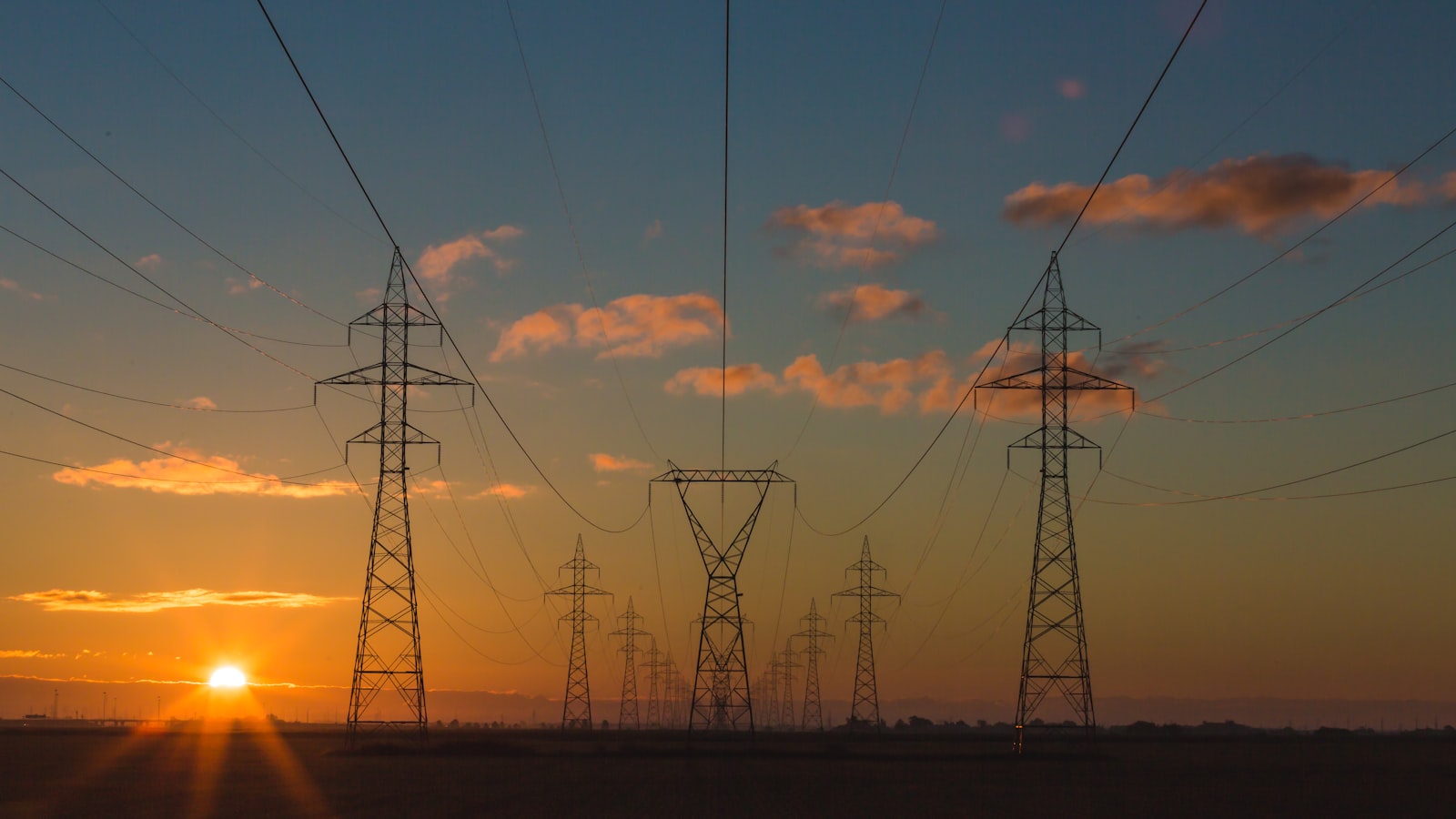
So utilities play it smart. Near the power plant, a step-up transformer raises the voltage to very high levels, which forces the current down low. With low current, the long transmission lines lose far less energy to heat on the journey across the countryside. Then, as the electricity nears homes and businesses, a series of step-down transformers brings the voltage back down to safe, usable levels, raising the current again for local use.
In short: high voltage for traveling, low voltage for using. Transformers are the gatekeepers at every step that swap between the two. Without them, sending power more than a short distance would waste an unacceptable amount of energy.
Once you know what to look for, transformers are everywhere:
- On utility poles and in green street-side boxes, stepping neighborhood voltage down to what enters your home.
- Inside phone and laptop chargers, dropping wall voltage to the low level electronics need. The brick gets faintly warm partly from the small, normal losses in this process.
- In doorbells and low-voltage lighting, which run on gently stepped-down power for safety.
- In countless appliances that contain electronics needing a different voltage than the wall provides.
A safety note worth stating plainly: transformers handle voltages that can be dangerous, and the large ones on poles and in substations carry lethal levels. This article is general educational information, not a guide to working on electrical equipment, which should be left to qualified professionals.
The takeaway#
A transformer changes voltage by passing energy between two coils as a changing magnetic field rather than a direct wire connection, with an iron core to channel that field efficiently. The ratio of turns in the two coils sets how much the voltage rises or falls, and because power is conserved, voltage and current trade off against each other like gears. That simple, motionless device is what lets electricity travel hundreds of miles at high voltage and low loss, then arrive at your wall at a level safe enough to charge your phone.