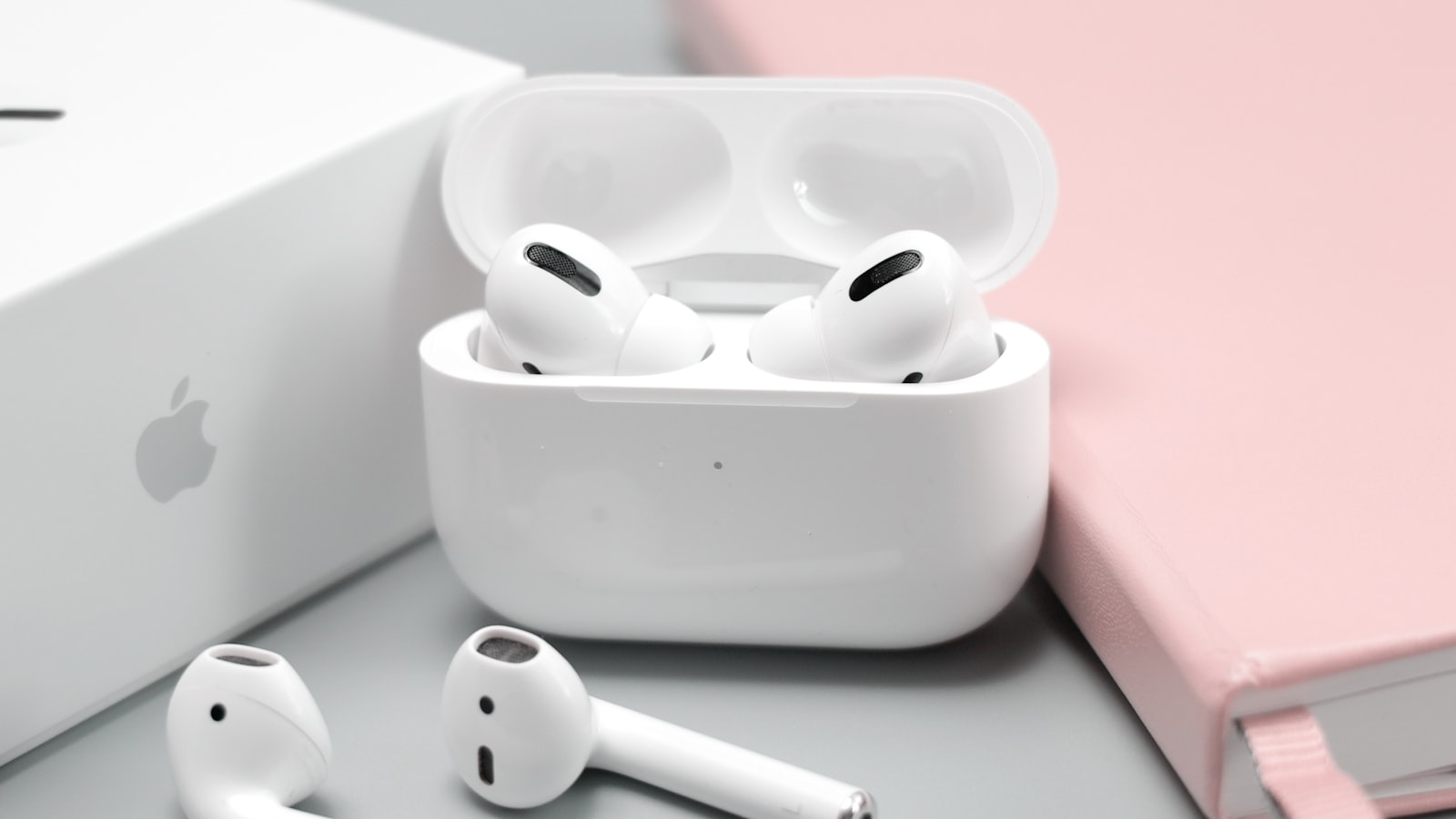
You tap a button, your earbuds say connected, and music flows from your phone to your ears with no wire in sight. We use Bluetooth dozens of times a day without a second thought, yet behind that effortless link is a tidy bit of engineering: invisible radio waves, a clever trick for dodging interference, and a quiet handshake that lets two devices trust each other. Here is what is really going on.
Radio waves doing the wire's job#
At its core, Bluetooth replaces a cable with radio waves. Both your phone and your earbuds contain a small radio: a transmitter to send signals and a receiver to catch them. The data that would have travelled down a copper wire is instead encoded into radio waves that ripple through the air.
Bluetooth uses a band of radio frequencies around 2.4 gigahertz. This band is unlicensed, meaning device makers can use it freely without a special permit, which is a big reason Bluetooth became so cheap and common. The catch is that this same band is crowded. Wi-Fi routers, microwave ovens, and countless other gadgets all share it, so Bluetooth has to be smart about coexisting.
It is deliberately a short-range technology, typically reaching across a room rather than a building. That is a feature, not a weakness. Short range keeps power use low, reduces interference with your neighbours, and makes it harder for someone far away to listen in.
Hopping frequencies to dodge the noise#
So how does Bluetooth survive in such a crowded band? It uses a technique called frequency hopping. Instead of sticking to one channel, the two devices rapidly jump between many narrow channels across the band, switching many times every second in a sequence they both agree on in advance.
A helpful analogy: imagine two friends trying to chat at a loud party. Rather than shouting over one noisy corner all night, they keep drifting to whichever quiet spot is free, always moving together so they never lose each other. If one channel is jammed by Wi-Fi or a microwave, the devices have already hopped somewhere clearer a fraction of a second later.
This brings a few practical benefits:
- Resilience. A burst of interference on one channel only ruins a tiny sliver of the conversation, which is easily resent.
- Coexistence. Many Bluetooth pairs can share the same room because they hop on different patterns and rarely collide for long.
- Privacy. Because the pattern looks random to an outsider, it is harder to follow the conversation by tuning into a single channel.
Pairing: the trust handshake#
Before two devices will exchange your data, they go through pairing, which is a one-time introduction that establishes trust. This is the part where you press a button, see a device name pop up, and sometimes confirm a number on both screens.
During pairing, the two devices perform a handshake: they exchange information and agree on a shared secret, often called a key. Think of it as two people agreeing on a private password. From then on, they can recognise each other and scramble their messages so an eavesdropper hears only gibberish.
Pairing usually unfolds like this:
- Discovery. One device makes itself visible, advertising that it is ready to connect.
- Connection request. The other device sees it and asks to connect.
- Verification. To make sure you are linking the right gadgets and not an impostor, the devices may show a matching code to confirm, or simply confirm automatically for simple accessories.
- Key exchange. They agree on a shared secret and store it.
Because that key is saved, your earbuds and phone become bonded. Next time they are near each other and switched on, they reconnect on their own, no button-pressing required. That is why pairing feels like a one-time chore but connecting afterward feels instant.
Sipping power instead of gulping it#
Modern Bluetooth comes in two broad flavours, and the difference matters for the battery in your gadgets. Classic Bluetooth is built for a steady stream of data, such as audio to your headphones. Bluetooth Low Energy is built to send small bursts of data while sipping very little power.
Low Energy works by staying mostly asleep. A fitness band or a wireless sensor wakes up briefly, sends a tiny packet such as a heart-rate reading, then drops back into a deep sleep. Because the radio is only active for a flicker at a time, a small coin-cell battery can last for months or even years. This is the technology behind tags, trackers, smart-home sensors, and wearables that you almost never charge.
Common misconceptions#
A few myths are worth clearing up:
- Bluetooth and Wi-Fi are not the same thing. They share a radio band but are built for different jobs. Wi-Fi connects you to the internet; Bluetooth links nearby devices to each other.
- Range is not unlimited. Walls, bodies, and distance all weaken the signal. If audio stutters, moving the devices closer or removing obstacles usually helps.
- Leaving Bluetooth on is not inherently reckless, but it is sensible to make your device non-discoverable when you are not pairing, and to remove old pairings you no longer use.
On that last point, a brief and honest note: like any wireless link, Bluetooth has had security flaws over the years, which is why keeping your devices updated matters. This is general educational guidance, not tailored security advice.
Where it shows up in daily life#
Once you notice it, Bluetooth is everywhere: wireless earbuds and headphones, car audio systems, keyboards and mice, fitness trackers, smartwatches, speakers, game controllers, and the small tags that help you find lost keys. It quietly stitches together the gadgets around you, sparing you a tangle of cables.
The takeaway#
Bluetooth swaps a cable for short-range radio waves, then survives a crowded airwave by rapidly hopping between channels in step with its partner. A one-time pairing handshake hands the two devices a shared secret so they trust and reconnect automatically, and a low-energy mode lets small sensors run for ages on a tiny battery. It is unglamorous, dependable engineering, which is exactly why you almost never have to think about it.