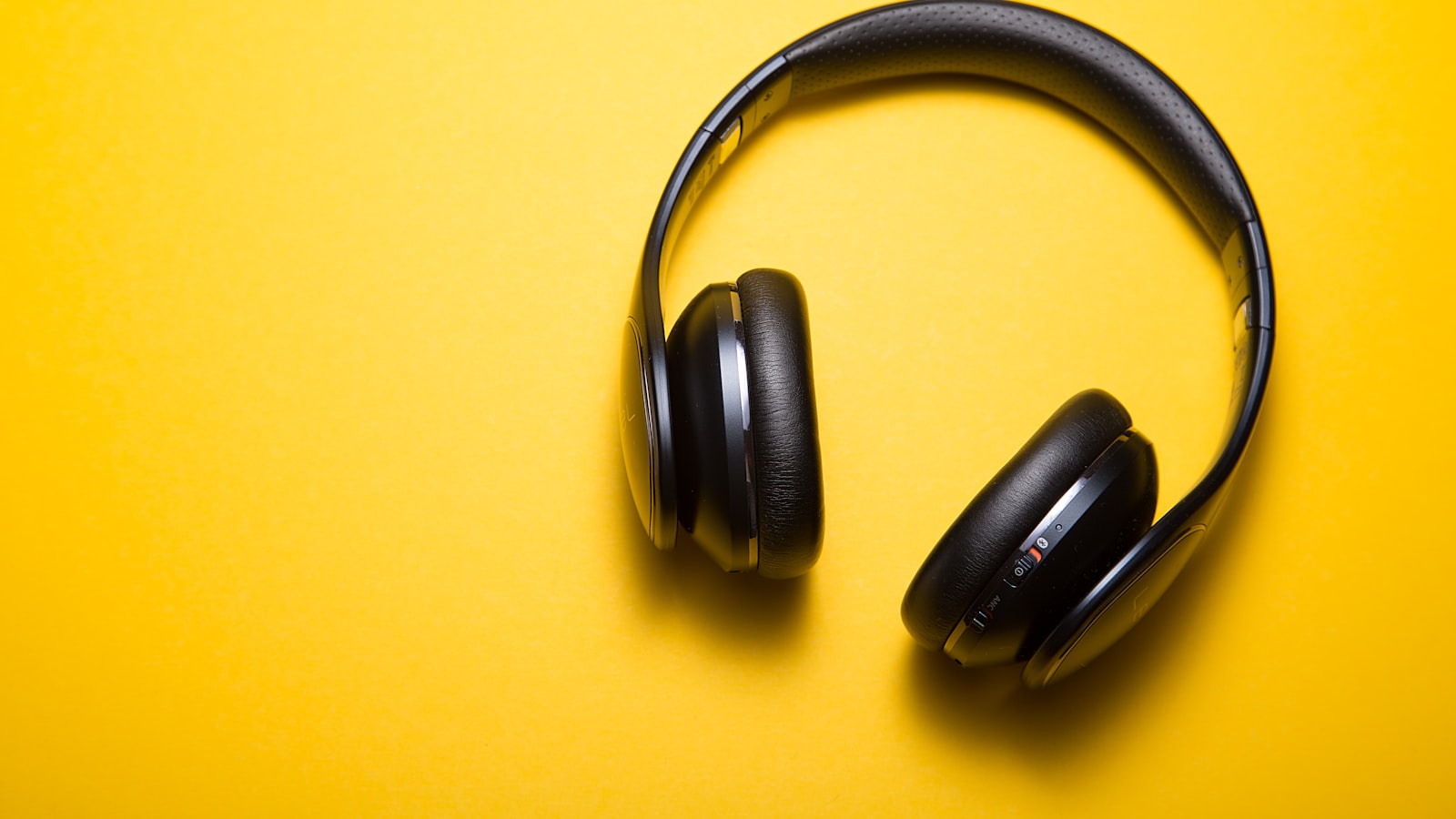
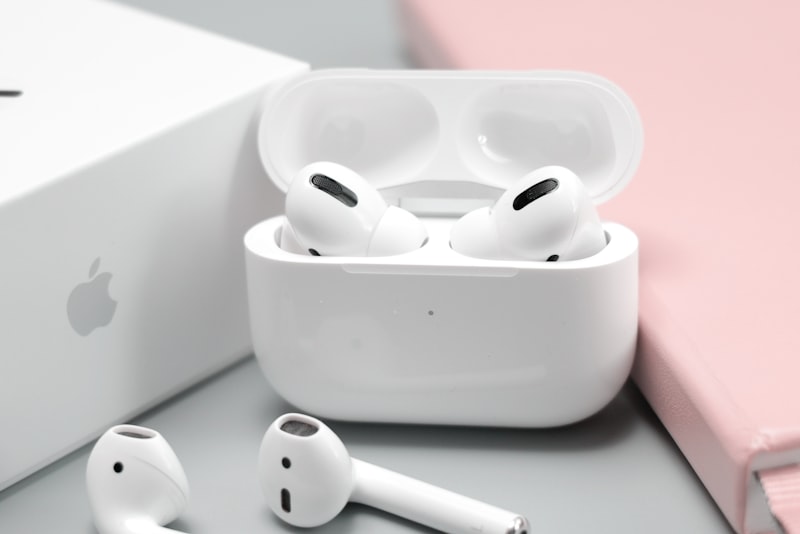
Slip on a good pair of noise-cancelling headphones in a noisy plane cabin, and the roar of the engines seems to melt away before you have even pressed play. It feels like magic, but it is really clever physics. The headphones are not just blocking sound with padding. They are actively fighting it with sound of their own.
What sound actually is#
Before the trick makes sense, it helps to picture what sound really is. Sound is a wave of pressure travelling through the air. When something vibrates, it pushes nearby air molecules together, then lets them spread apart, over and over. Those squeezes and stretches ripple outward and eventually wiggle your eardrum, which your brain reads as sound.
You can draw a sound wave as a wavy line. The peaks are moments of high pressure, and the troughs are moments of low pressure. A deep engine hum is a slow, lazy wave. A high whistle is a fast, tight wave. This shape is the key to the whole idea, because waves can either reinforce each other or work against each other.
Fighting sound with an opposite wave#
Here is the core principle, called destructive interference. If you take a sound wave and create a second wave that is its exact mirror image, the two cancel out. Where the first wave pushes air molecules together, the second pulls them apart by the same amount. The two pressures sum to roughly zero, and your ear hears something much quieter.
That mirror-image wave is described as being out of phase. A peak in the original lines up with a trough in the copy, so they erase each other.
A simple analogy: imagine two people pushing on opposite sides of the same swinging door with equal force. The door does not move. Noise cancellation does the same thing to a sound wave, holding it still so it never reaches your eardrum with much energy.
How the headphones pull it off#
To cancel a sound, the headphones first have to know what that sound looks like, and then produce its opposite fast enough to matter. They do this with three main parts working together:
- Microphones. Tiny microphones built into the earcups constantly listen to the noise around you, and often inside the cup as well.
- A processor. A small chip analyses the incoming noise wave, then calculates the exact opposite wave needed to cancel it.
- The speaker. The same driver that plays your music also plays this anti-noise signal, mixed in alongside whatever you are listening to.
All of this happens in a tiny fraction of a second, continuously, thousands of times per moment. The processor is always re-measuring and adjusting, because the noise around you keeps changing.
There are two common arrangements. Feedforward systems put the microphone on the outside of the cup to catch noise before it arrives. Feedback systems put the microphone inside, near your ear, to measure what actually leaks through and correct it. Many headphones use both at once for better results.
Why steady hum vanishes but a sneeze does not#
Notice that noise cancellation works brilliantly on the steady drone of an aeroplane, a train, or an air conditioner, yet a sudden voice or a clattering plate still gets through. This is not a flaw you can simply fix with a better chip. It comes down to two limits.
- Predictability. Low, steady sounds are slow, repeating waves. Because the next part of the wave looks like the last part, the processor can reliably predict and cancel it. A sudden, sharp sound is unpredictable and over before the system can build a perfect mirror of it.
- Wave size. Low-frequency sounds are long, stretched-out waves that are easier to match. High-frequency sounds are short and tight, so even a tiny timing error means the anti-noise no longer lines up, and the cancellation falls apart.
For those higher and sudden sounds, headphones lean on plain old passive blocking instead, meaning the physical seal of the earcups or tips muffling the sound the same way earplugs do.
A common misconception to clear up#
Many people assume noise cancellation creates a bubble of total silence, or worry it works by blasting loud sound into your ears. Neither is true.
- It does not add loudness. The anti-noise wave is designed to subtract energy from the noise, not pile more on top. In the ideal case, less total sound reaches your eardrum, not more.
- It is never perfect. Real rooms have echoes, your head moves, and noise comes from many directions at once. The system reduces noise, often dramatically, but some always slips through.
- It is separate from your music. Your audio rides on top of the cancellation. That is why you can enjoy quiet even with nothing playing.
Where you meet it in daily life#
Once you know the trick, you start spotting it everywhere. Travel headphones tame jet and road noise. Open-plan office workers use earbuds to mute background chatter so they can focus. The same idea, scaled up, even appears in some cars, where speakers play anti-noise to quiet engine drone in the cabin.
It is worth keeping a small safety habit in mind. Because the world goes quiet, you may not hear a car, a bike, or someone calling your name. Many headphones include a transparency or pass-through mode that lets outside sound back in for exactly this reason. Use it when you need to stay aware of your surroundings.
The takeaway#
Noise-cancelling headphones do not build a wall against sound. They listen to the noise, work out the exact opposite wave, and play it back so the two cancel before they reach your eardrum. It is the same as two equal pushes on a door leaving it still. The effect shines on the steady, low hum of engines and air conditioners, and tapers off for sudden, high-pitched sounds, where the simple physical seal of the earcups quietly does the rest.