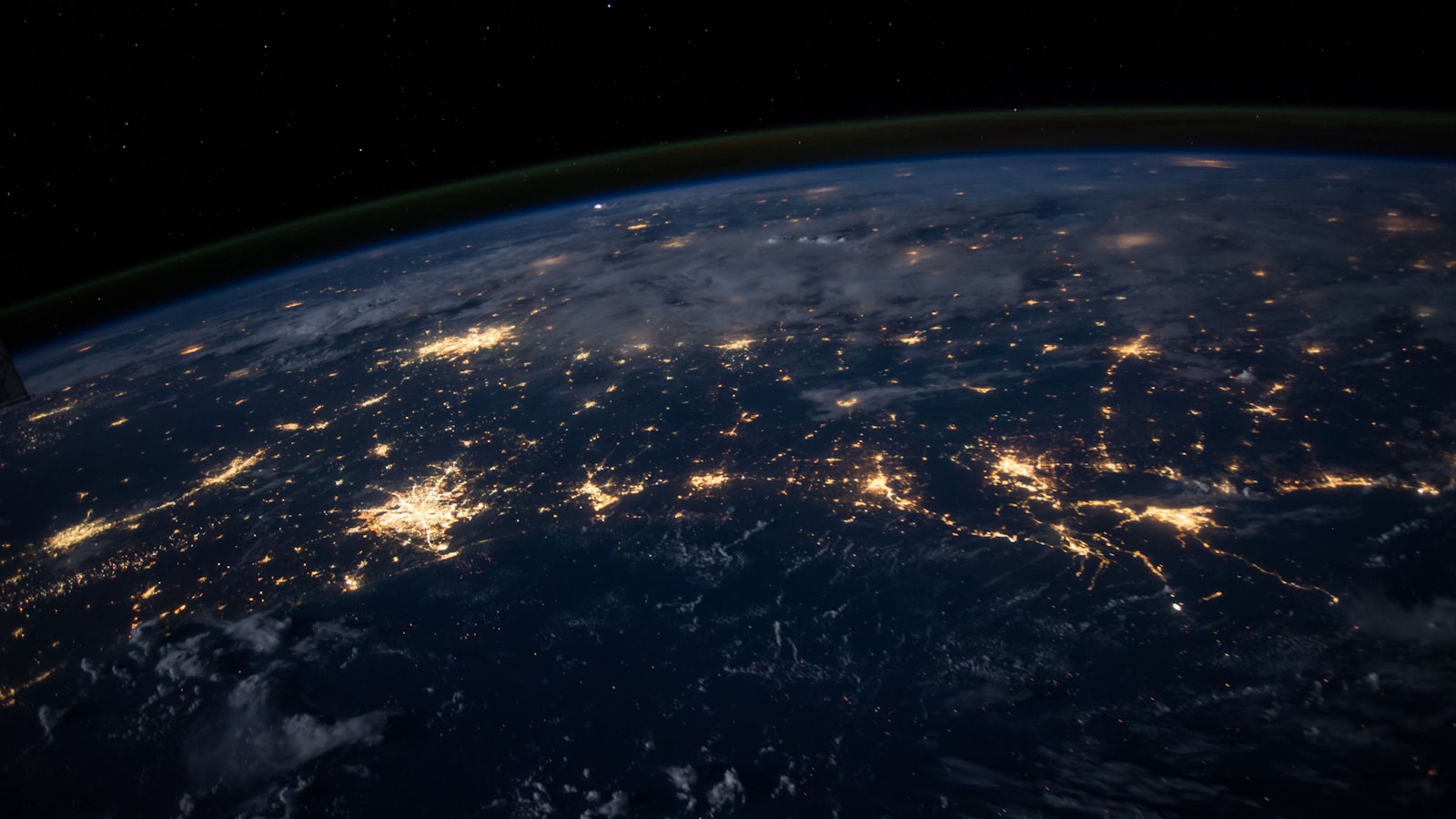
You type an address, hit enter, and a page appears in less than a second. In that moment your request may have crossed an ocean, passed through a dozen machines you will never see, and come back — all before you finish blinking. Here is the plain-English story of what actually happens.
The internet is a network of networks#
The first thing to understand is that there is no single "internet" sitting in one place. The word literally comes from inter-network: a way to connect many separate networks so they can talk to each other.
Your home network is one small network. Your internet provider runs a larger one. Universities, companies, and entire countries run their own. The internet is the agreement that lets all of these independent networks pass traffic between themselves using a shared set of rules called protocols.
Think of it like the global postal system. There is no one company that delivers every letter on Earth. Instead, thousands of national and regional carriers agree on common address formats and hand mail off to each other. The internet works the same way, just at the speed of light and with far more handoffs.
Everything travels in packets#
When you request a webpage, the data does not travel as one big stream. It is chopped into small pieces called packets. Each packet carries:
- A chunk of the actual data
- The address it is going to
- The address it came from
- Information about how to reassemble it in order
Breaking data into packets is one of the most important ideas in all of networking. It means a giant file and a tiny message can share the same wires without one blocking the other, and it means packets can take different routes and still arrive correctly.
Imagine mailing a long book by tearing out the pages, numbering them, and sending each in its own envelope. The pages might travel by different trucks and arrive out of order, but because they are numbered, the recipient can stack them back into the original book. The internet does this millions of times per second.
Names and numbers: finding the right server#
You remember website names, but machines find each other using numbers called IP addresses. So the first step in any request is translating the name into a number.
This is the job of the Domain Name System, or DNS, often described as the phone book of the internet:
- Your device asks a DNS server, "What is the address for this site?"
- The DNS system looks it up and replies with the numeric IP address.
- Your device now knows exactly where to send its packets.
This lookup usually takes a fraction of a second and is quietly cached, so visiting the same site again skips most of the work.
The journey through routers#
With the destination known, your packets begin hopping toward it. The devices that make this happen are routers — not just the box in your home, but a vast chain of much larger machines run by internet providers and network operators.
Each router does a simple but crucial job: it looks at where a packet is headed and forwards it one step closer, choosing the best available path. No single router knows the entire route from start to finish. Each just knows the next sensible hop, the way a relay runner only needs to reach the next runner, not the finish line.
This hop-by-hop design is what makes the internet so resilient. If one path is congested or a cable is cut, routers automatically steer packets around the problem. The network reroutes itself without anyone manually intervening.
Undersea cables and data centers#
Most people picture the internet as wireless, floating invisibly through the air. In reality, the global backbone is overwhelmingly physical cable, and a large share of intercontinental traffic runs through undersea fiber-optic cables laid across ocean floors.
These cables carry data as pulses of light through glass strands thinner than a hair, at staggering capacity. Satellites and wireless links exist, but the heavy lifting of connecting continents is done by these unglamorous tubes on the seabed.
At the other end of your request sits a server — a powerful, always-on computer whose job is to respond to requests. Servers usually live in data centers: warehouse-sized buildings packed with thousands of machines, backup power, and intense cooling. When you load a popular site, you are often reaching one of many copies of it, hosted in a data center geographically close to you to keep things fast.
The round trip, start to finish#
Putting it all together, here is the full path of a single click:
- You enter an address; DNS turns the name into a numeric IP address.
- Your device splits the request into packets and sends them to your router.
- Your provider's routers forward those packets hop by hop, possibly across undersea cables, toward the destination.
- The server in a data center receives the request and prepares a response.
- The response is split into packets and travels back through the same kind of journey.
- Your device reassembles the packets in order, and the page appears.
All of this typically happens in well under a second, repeated constantly as you scroll, click, and stream.
Common misconceptions#
A few ideas are worth correcting:
- "The internet and the web are the same." The internet is the underlying network of connected machines. The web is just one thing built on top of it — websites and links. Email, video calls, and app data also ride the internet without being "the web."
- "The cloud is somewhere ethereal." The cloud is simply someone else's servers in a real data center on real land, drawing real electricity.
- "Deleting something removes it from the internet." Once data has been copied across servers and caches, you rarely control every copy. This is general information, not security advice, but it is a useful reality to keep in mind before posting.
The takeaway#
The internet can feel abstract, but it is profoundly physical and surprisingly logical. Your data is broken into numbered packets, addressed using a global naming system, and relayed hop by hop through routers and cables — many of them resting on the ocean floor — to reach a server in a data center, which sends a reply back the same way. There is no magic central machine. There is just an enormous, cooperative chain of networks agreeing to pass your message along, one step at a time, fast enough to feel instant.